

Why Home Battery Storage Is Booming in 2025
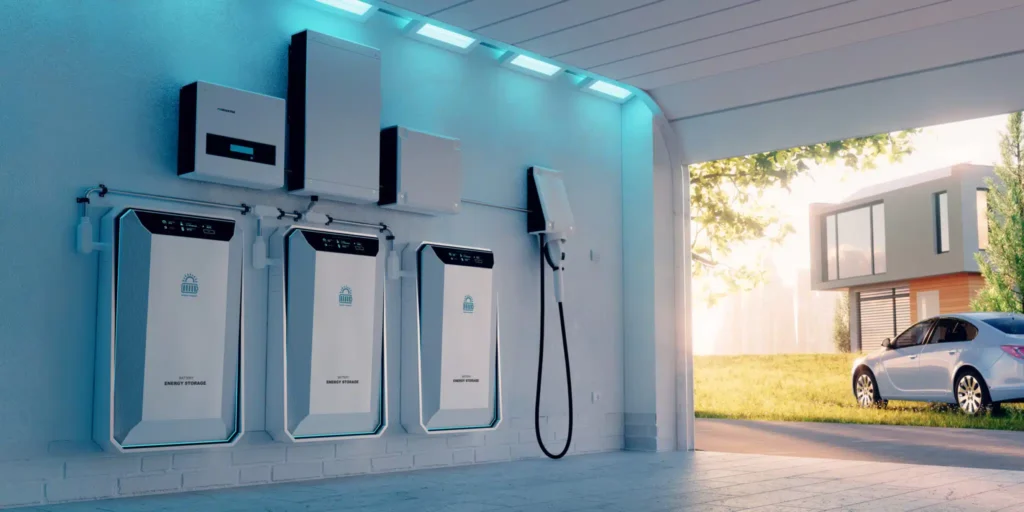
Home battery storage is no longer a niche add-on — in 2025–2026, it has become a mainstream upgrade for solar-powered homes across the United States. Rising electricity prices, grid instability, extreme weather events, and improved battery technology are driving more homeowners to invest in energy storage.
A home battery allows you to store excess solar energy, reduce reliance on the grid, protect your home during outages, and optimize long-term savings. In this guide, we’ll explain how home batteries work, compare the best solutions available in 2025–2026, break down prices and return on investment (ROI), and help you decide whether battery storage makes sense for your home.
How Home Battery Storage Works
A home battery stores electricity generated by your solar panels during the day. Instead of sending excess energy back to the grid, the battery saves it for later use — at night, during peak pricing hours, or during power outages.
Typical energy flow:
- Solar panels generate electricity
- Home uses solar power first
- Excess energy charges the battery
- Battery supplies power when solar production drops
- Grid power is used only when needed
Modern lithium-ion batteries automatically manage this process using smart energy management software.
Why Homeowners Are Adding Batteries in 2025–2026
Battery adoption is accelerating for several reasons:
1. Power Outage Protection
Blackouts caused by storms, wildfires, and grid overloads are becoming more frequent. A battery can keep essential appliances running for hours or even days.
2. Rising Electricity Rates
Many utilities now use time-of-use (TOU) pricing. Batteries allow homeowners to avoid expensive peak-hour electricity.
3. Net Metering Changes
In states like California, exported solar energy is credited at lower rates. Storing energy is often more profitable than exporting it.
4. Federal Tax Credit
Home batteries qualify for the 30% federal tax credit, even when installed separately from solar.
Types of Home Battery Systems
AC-Coupled Batteries
- Installed independently of solar inverter
- Easy retrofit for existing solar systems
- Slightly lower efficiency
DC-Coupled Batteries
- Installed between panels and inverter
- Higher efficiency
- Lower hardware cost
- Best for new solar installations
Choosing the right type depends on whether you already have solar installed.
Best Home Battery Solutions (2025–2026)
Below are the most popular and reliable residential battery systems in the U.S.
1. Tesla Powerwall 3
- Capacity: ~13.5 kWh
- Power output: High (supports large appliances)
- Warranty: 10 years
- Best for: Whole-home backup, smart integration
2. Enphase IQ Battery 10T
- Capacity: 10.1 kWh
- Modular design
- Excellent app & monitoring
- Best for: Enphase solar systems
3. LG Energy Solution RESU
- Capacity: 9.8–16 kWh
- Compact design
- Proven reliability
4. FranklinWH aPower
- Capacity: 13.6 kWh
- High surge capability
- Designed for full-home backup
5. Sonnen ecoLinx
- Premium European solution
- Long cycle life
- Best for luxury smart homes
Home Battery Prices in 2025–2026
Average costs (installed):
- Battery unit: $8,000–$12,000
- Installation & hardware: $3,000–$6,000
- Total before incentives: $11,000–$18,000
After 30% Federal Tax Credit:
- Net cost: $7,700–$12,600
Prices vary based on location, electrical upgrades, and backup configuration.
Return on Investment (ROI): Is a Battery Worth It?
Battery ROI depends on how you use it, not just the upfront cost.
Best ROI scenarios:
- High electricity rates
- Time-of-use pricing
- Frequent outages
- Limited net metering compensation
- Solar + battery installed together
Typical savings:
- Annual savings: $300–$1,000
- Payback period: 8–14 years
- Battery lifespan: 10–15 years
While batteries alone rarely outperform solar in ROI, they dramatically increase energy independence and resilience.
How Many Batteries Do You Need?
Basic backup (lights, fridge, Wi-Fi):
- 1 battery (10–13 kWh)
Partial home backup:
- 1–2 batteries
Whole-home backup:
- 2–3+ batteries
The exact number depends on:
- Home size
- Appliance load
- Desired backup duration

Battery Maintenance & Lifespan
Modern lithium-ion batteries require minimal maintenance.
Typical lifespan:
- 10–15 years
- 6,000–10,000 cycles
Maintenance tips:
- Keep battery within recommended temperature range
- Monitor performance via app
- Avoid deep discharges when possible
Common Myths About Home Batteries
Myth 1: Batteries are only useful during blackouts
Reality: Most savings come from peak-rate avoidance.
Myth 2: Batteries require daily maintenance
Reality: Modern systems are fully automated.
Myth 3: Batteries are unsafe
Reality: UL-certified batteries meet strict safety standards.
Is Home Battery Storage Right for You?
Battery storage makes the most sense if you:
- Live in a blackout-prone area
- Have high electricity rates
- Want energy independence
- Are installing solar in 2025–2026
If your primary goal is savings, solar alone may be enough. If resilience and control matter, batteries are a powerful upgrade.
Final Thoughts
Home battery storage is rapidly becoming a core component of modern solar systems. While it may not be essential for every homeowner, the benefits — backup power, rate optimization, and peace of mind — are compelling.
Before deciding, it’s crucial to understand your energy usage, local utility rules, and system sizing.
👉 Estimate Your Solar + Battery Setup:
Use the BrightSolarGuide calculator to see costs, savings, and ROI for your home in seconds.