
Best Solar Panels for Homes in 2025–2026: A Complete Buyer’s Guide
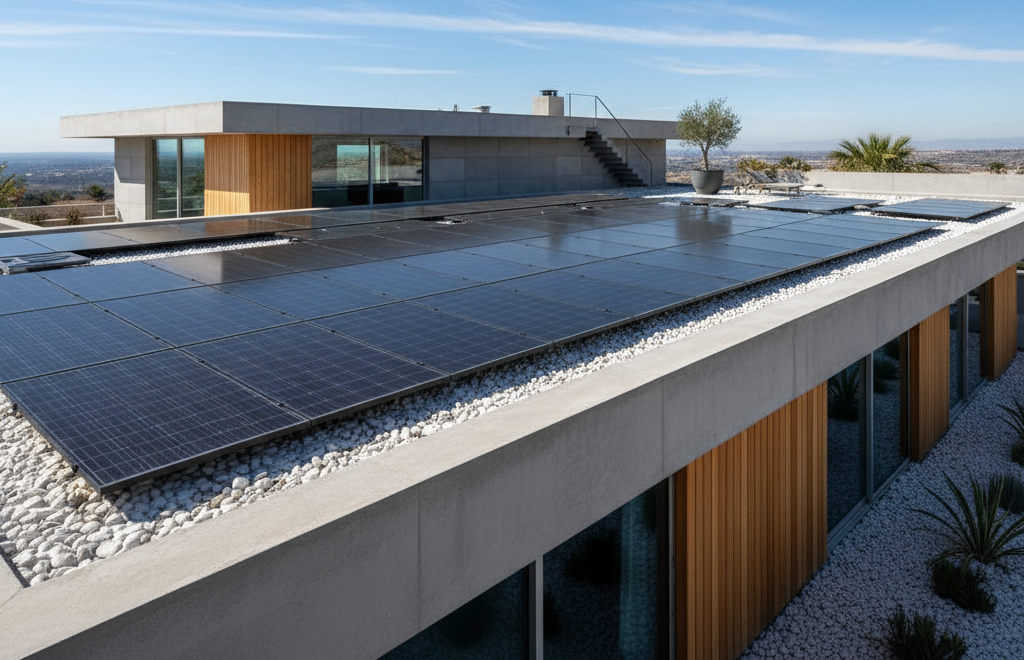
As energy costs continue to rise across the United States, more homeowners than ever are turning to solar power as a reliable, cost-effective, and eco-friendly solution. Whether you live in sunny California, the windy plains of Texas, or the coastal areas of Florida, installing a home solar system in 2025 can dramatically reduce your electricity bills — and even earn you money through tax incentives and grid feed-in programs.
In this guide, we’ll explore the best solar panels for homes in 2025–2026, compare the top manufacturers, discuss key performance factors, and show you how to estimate your savings using our free solar cost calculator.
🌞 Why 2025 Is the Perfect Year to Go Solar
2025 is shaping up to be one of the best years to invest in solar energy in the United States.
Here’s why:
- Extended Federal Tax Credit (ITC): Homeowners can still claim a 30% tax credit on installation costs through 2032.
- Lower Equipment Prices: The price per watt for residential solar panels dropped below $2.80/W for the first time.
- Technological Advancements: New half-cut and bifacial panel designs offer up to 22–23% efficiency, meaning you can generate more power with fewer panels.
- Increased Property Value: A solar-powered home in the US can be worth 3–5% more than similar non-solar homes.
⚙️ How to Choose the Right Solar Panels for Your Home
Not all solar panels are created equal. The “best” panel depends on your roof size, budget, climate, and energy needs.
Here are the most important factors to consider:
1. Efficiency Rating
Higher efficiency means more energy production from the same amount of sunlight. In 2025, leading residential panels average 20–22% efficiency.
2. Durability and Warranty
Top-tier manufacturers now offer 25–30-year performance warranties, which ensures your investment stays productive for decades.
3. Panel Type
- Monocrystalline: Highest efficiency, sleek black look — best for limited roof space.
- Polycrystalline: More affordable, slightly less efficient.
- Thin-film: Lightweight and flexible, good for non-traditional roofs.
4. Temperature Coefficient
Indicates how well a panel performs in hot weather. The lower the coefficient (closer to -0.3%), the better it handles heat — ideal for southern states like Arizona and Texas.
🏆 Best Solar Panel Brands for Homes in 2025–2026
Here’s a summary of the top-performing residential solar panels in 2025, based on efficiency, durability, warranty, and price per watt.
| Brand | Model | Efficiency | Warranty | Est. Cost per Watt | Best For |
|---|---|---|---|---|---|
| SunPower | M-Series 440W | 22.8% | 25 yrs | $3.00 | Premium homes, high efficiency |
| REC | Alpha Pure-R | 22.3% | 25 yrs | $2.85 | Balanced performance |
| Qcells | Q.PEAK DUO BLK ML-G10+ | 21.6% | 25 yrs | $2.60 | Great value for money |
| Canadian Solar | HiHero 445W | 21.5% | 25 yrs | $2.40 | Large roofs, budget-conscious |
| JinkoSolar | Tiger Neo N-Type | 22.0% | 25 yrs | $2.35 | Hot climates |
| LONGi Solar | Hi-MO 6 Explorer | 21.8% | 25 yrs | $2.25 | Consistent all-rounder |
💡 Pro tip: If your roof gets partial shade during the day, prioritize panels with PERC or N-type technology — they’re more shade-tolerant and maintain performance better than standard types.
💰 How Much Do Solar Panels Cost in 2025-2026?
The average cost of installing a 6 kW solar system in the US is around $14,000 before tax credits, or roughly $9,800 after incentives.
However, this varies significantly by state and electricity rates.
| State | Avg. Cost per Watt | Typical System Cost | Payback Period |
|---|---|---|---|
| California | $2.70 | $16,200 | 6–7 years |
| Texas | $2.60 | $15,600 | 8 years |
| Florida | $2.55 | $15,300 | 9 years |
| New York | $3.00 | $18,000 | 7–8 years |
| Arizona | $2.40 | $14,400 | 6 years |
To see a personalized estimate for your state, use our free Solar Cost Calculator — it will instantly show your potential savings, system size, and payback time based on your zip code and energy use.
🌤️ How Many Solar Panels Do You Need?
The number of panels depends on your household energy use and your region’s sunlight hours.
For example:
- The average American household consumes ~10,600 kWh/year.
- In a sunny state like Arizona, you’d need around 18 panels (400W).
- In New York or Michigan, closer to 24 panels.
👉 Quick tip: The Solar Cost Calculator on our site automatically factors in your energy use, local sun exposure, and panel efficiency — giving you a custom recommendation in seconds.
♻️ Environmental Benefits of Solar Power
Beyond financial savings, switching to solar offers powerful ecological benefits:
- Reduces CO₂ emissions by ~4 tons per year per household
- Improves grid stability and reduces fossil fuel dependence
- Boosts local clean energy jobs — solar now employs over 260,000 Americans
Going solar isn’t just about cutting costs — it’s a personal contribution to a cleaner, more sustainable future.
🧠 Common Myths About Home Solar Panels
Myth 1: “Solar only works in hot, sunny climates.”
✅ Reality: Solar panels work efficiently even in cold or cloudy weather — Germany, one of the cloudiest countries, is a solar leader.
Myth 2: “You need to replace your roof first.”
✅ Reality: If your roof is under 10–15 years old and structurally sound, panels can be safely installed without replacement.
Myth 3: “Solar panels require a lot of maintenance.”
✅ Reality: They’re nearly maintenance-free — occasional cleaning and an inverter check every few years are enough.
🌞 Final Thoughts
2025 and 2026 represent a golden opportunity for homeowners to invest in solar.
With falling installation costs, rising incentives, and record-high energy bills, the ROI on solar systems has never been stronger.
Whether you’re researching panel types, comparing installation quotes, or simply curious about potential savings — start by estimating your system size and costs using our Free Solar Calculator for the USA.
It only takes a minute, and could save you thousands over the next 25 years.