
Complete Solar Installation Guide for Homeowners 2025-2026
Why 2025 Is the Perfect Year to Go Solar
If you’ve been thinking about installing solar panels, 2025 may be the most advantageous year yet for U.S. homeowners. Equipment prices have stabilized, panel efficiency is at an all-time high, and the 30% federal solar tax credit remains available. Thousands of homeowners are now saving anywhere from $800 to $2,000 per year on electricity — and you could be next.
This guide explains everything you need to know before installing solar on your home: planning, roof requirements, cost expectations, system sizing, permits, contractor selection, and more. Whether you’re in California, Texas, Florida, or New York, this step-by-step breakdown will help you make informed decisions and avoid costly mistakes.
1. Step One: Evaluate Your Home’s Solar Installation Potential
Not every roof is ideal for solar, but most are. Before you start requesting quotes, evaluate the following:
Roof Direction
- The best direction in the U.S.: South-facing
- Acceptable: Southwest, Southeast
- Still workable: East or West
- Not ideal: North-facing
Roof Angle
The optimal angle is 25–35 degrees, but panels work well between 10–40 degrees.
Shading
Any significant shading from trees or nearby buildings can reduce output.
Tip: If more than 20% of your roof is shaded during the day, you may need microinverters or optimizers.
2. Step Two: Check the Condition of Your Roof
Solar panels last 25–30 years, so ideally your roof should have at least 10+ years of remaining lifespan before solar Installation.
Signs you might need roof work first:
- Curling or cracked shingles
- Water damage or soft spots
- Visible sagging
- Roof older than 15–20 years depending on material
A pre-installation roof inspection costs around $150–$300, but many installers include it for free.
3. Step Three: Estimate Your Energy Needs
Understanding your electricity usage is crucial for system sizing.
Find your annual kWh use:
Check your utility bill for “Annual Usage,” or add up 12 months manually.
Average U.S. household:
➡️ 10,600 kWh per year
Approximate system size formula:
System Size (kW) = Annual Usage (kWh) ÷ (Sun Hours × 365 × Efficiency)
But the simplest way before the solar Installation is to use our automated tool:
👉 Try the Solar Calculator (US): https://brightsolarguide.com/us/solar-panels-cost-us/
4. Step Four: Understand the Different Types of Equipment
Solar systems have multiple components. Choosing the right ones impacts performance and longevity.
A. Solar Panels
Most common types:
- Monocrystalline (best performance)
- 20–23% efficiency
- Higher cost, best durability
- Polycrystalline (budget option)
- 16–18% efficiency
- Lower cost, less performance
- Thin-film (rare for homes)
- Lightweight
- Low efficiency
B. Inverters
You’ll choose between:
- String inverter
Cheapest and simplest - Microinverters
Best for shaded roofs; higher cost - Power optimizers
Middle-ground solution
C. Batteries (Optional)
Popular for backup power, especially in
California, Texas, Florida, New York.
Top choices:
- Tesla Powerwall
- Enphase IQ Battery
- LG Chem RESU
5. Cost Breakdown: What Solar Really Costs in 2025 – 2026
Solar costs are at their lowest in 10 years.
Average cost (national):
- $2.50–$3.20 per watt before incentives
Example for a 6 kW system:
- Before tax credit: ~$15,000
- After 30% federal credit: ~$10,500
Average payback period:
➡️ 6–9 years, depending on your state.
6. Step Five: Permits and Paperwork
Your installer usually handles everything, but here’s what they must file:
- Electrical permits
- Structural permits
- Interconnection request
- Net metering agreement
- HOA approvals (if applicable)
Processing time varies:
2–8 weeks depending on your state and utility company.
7. Step Six: Choosing the Right Solar Installer
Red flags to avoid:
- No physical address
- Pushy sales tactics
- Vague warranty terms
- No roof inspection
What a reputable installer provides:
- 25-year production warranty
- 10–25-year workmanship warranty
- Free roof assessment
- Detailed energy modeling
- Timeline + clear pricing
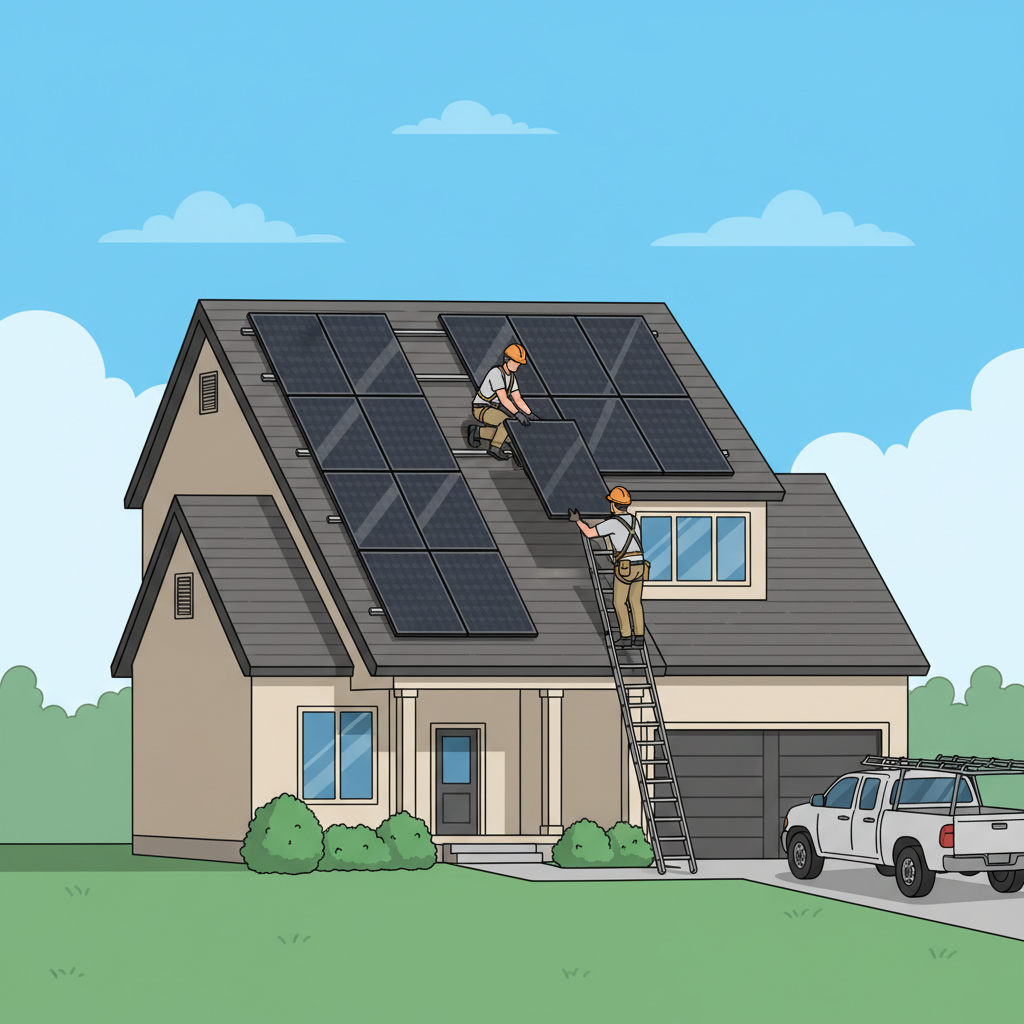
8. Step Seven: Installation Day
A typical rooftop installation takes:
- 4–8 hours for standard homes
- 1–2 days for large or complex roofs
After installation, the utility company performs a final inspection before activating your system.
9. Step Eight: Understanding ROI and Long-Term Savings
Over 25 years, the average homeowner saves:
➡️ $20,000 to $45,000 depending on state and electricity rates.
Factors that increase ROI:
- High electricity rates
- Good sunlight hours
- State incentives (CA, MA, NJ, NY, TX)
- South-facing roof
- Battery storage (in states with frequent outages)
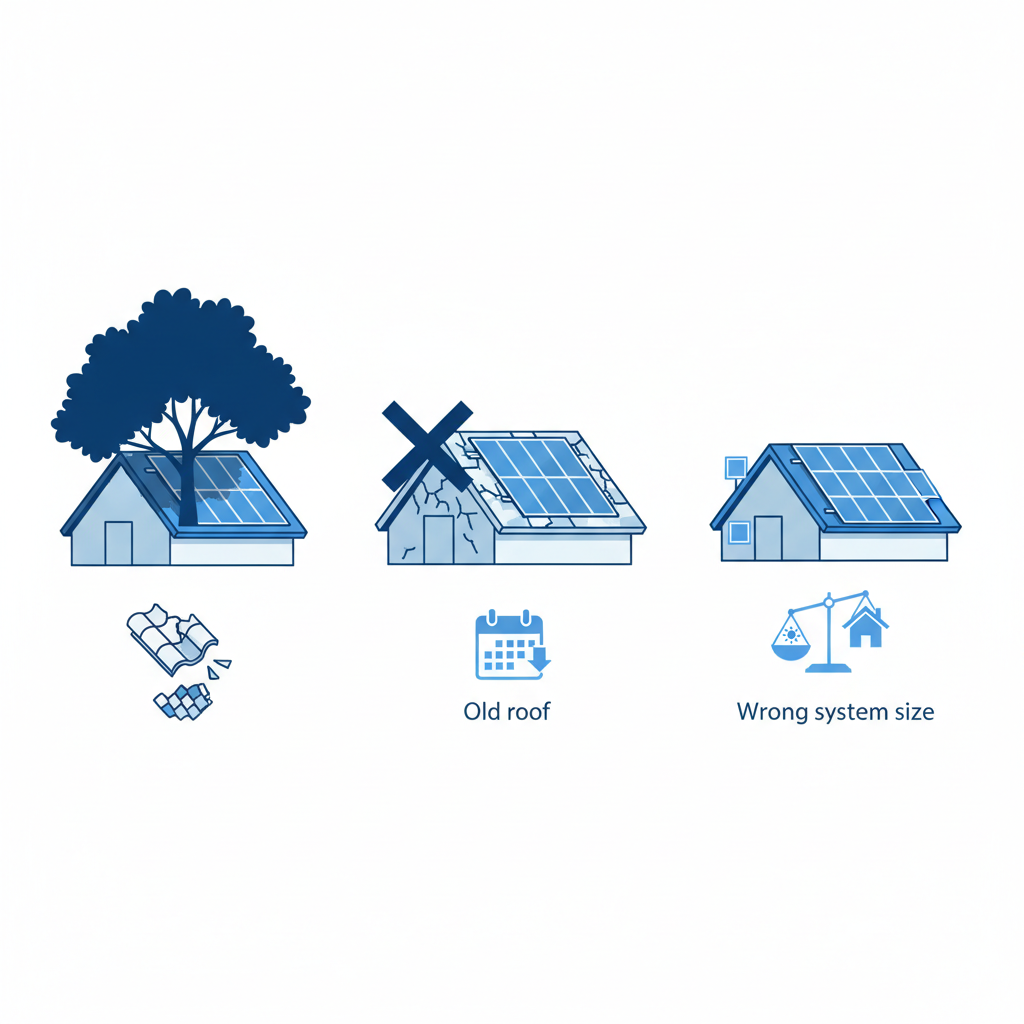
10. Common Mistakes to Avoid
- Installing solar on an old roof
- Choosing the cheapest installer
- Ignoring shading issues
- Not considering future energy use (EV, heat pump)
- Skipping production monitoring
Your Path to Solar Starts Here
Installing solar panels in 2025 is a smart financial and environmental decision. With low equipment prices, strong incentives, and rapid installation timelines, more U.S. homeowners than ever are making the switch.
Before you get quotes, make sure you know your numbers.
👉 Calculate Your Solar Savings:
https://brightsolarguide.com/us/solar-panels-cost-us/
Solar is an investment — and the right knowledge helps you maximize it.